The Jane Coffin Childs Memorial Fund for Medical Research (JCC Fund) was established by the Childs Family in 1937, to honor the memory of Jane Coffin Childs. Inspired by the founding purpose to support research into the causes and treatment of cancer, the Fund’s mission has broadened to support fundamental scientific research that advances our understanding of the causes, treatments, and cures for human disease.

Jane Coffin Childs announces 2025 Jane Coffin Childs Fellows!

See our 2025 Impact Report!


Apply Now
1700

1700 fellows have been funded since the JCC Fund's inception

23

Former fellows & scientific advisors include 23 Nobel laureates

You

Have a chance to be one of the funded. Apply now!

From the blog

New Scientific Advisor: Dr. Sergiu Pasca

Sergiu Pasca, M.D., has joined the JCC Board of Scientific Advisors. Dr. Pasca is the Kenneth T. Norris, Jr. Professor of Psychiatry and Behavioral Sciences at Stanford University, and the Bonnie Uytengsu Family Director of […]

Read More

New Research from JCC Fellow Dr. Emily Rundlet

Jane Coffin Childs Fellow Emily Rundlet, Ph.D., has discovered an antigen for antibodies that neutralize monkeypox virus. Dr. Rundlet and her colleagues used a novel AI-based strategy to rapidly identify and prioritize potential antigens for […]

Read More

Featured Fellow

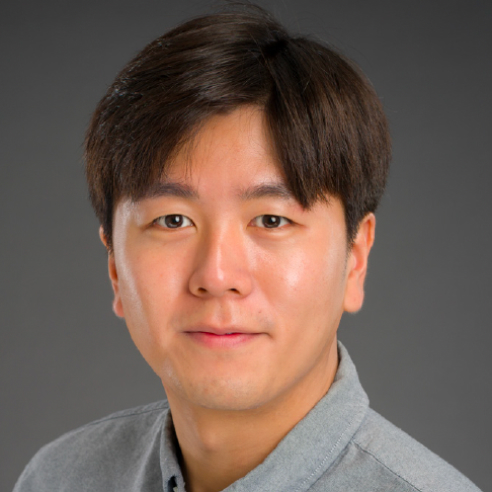
Chinmay Purandare, Ph.D.

Chinmay Purandare, Ph.D.

University of California, San Francisco

The hippocampus is a mental GPS that uses visual information to determine relative location. However, the neural pathways that convey visual information to the hippocampus are unknown. Dr. Chinmay Purandare will investigate this information transmission in Dr. Massimo Scanziani’s lab at the University of California, San Francisco. Dr. Purandare will use a novel set of visual cues, developed during his graduate studies, to directly activate hippocampal neurons and determine which visual brain regions are informing the hippocampus. Furthermore, Purandare would probe if the visual information conveyed is different depending on whether the subject is moving versus externally generated visual motion. Dr. Purandare’s research will further our understanding of circuit level connections between visual pathways and the hippocampus.

As a graduate student in Dr. Mayank Mehta’s lab at the University of California, Los Angeles, Purandare explored the minimal set of cues necessary for driving hippocampal responses. He developed novel visual stimuli and found that the hippocampus responds like sensory cortices when presented with these cues. This research led Dr. Purandare to the question of how these visual cues reach the hippocampus, which he will now explore in Dr. Scanziani’s lab.


View all Fellows